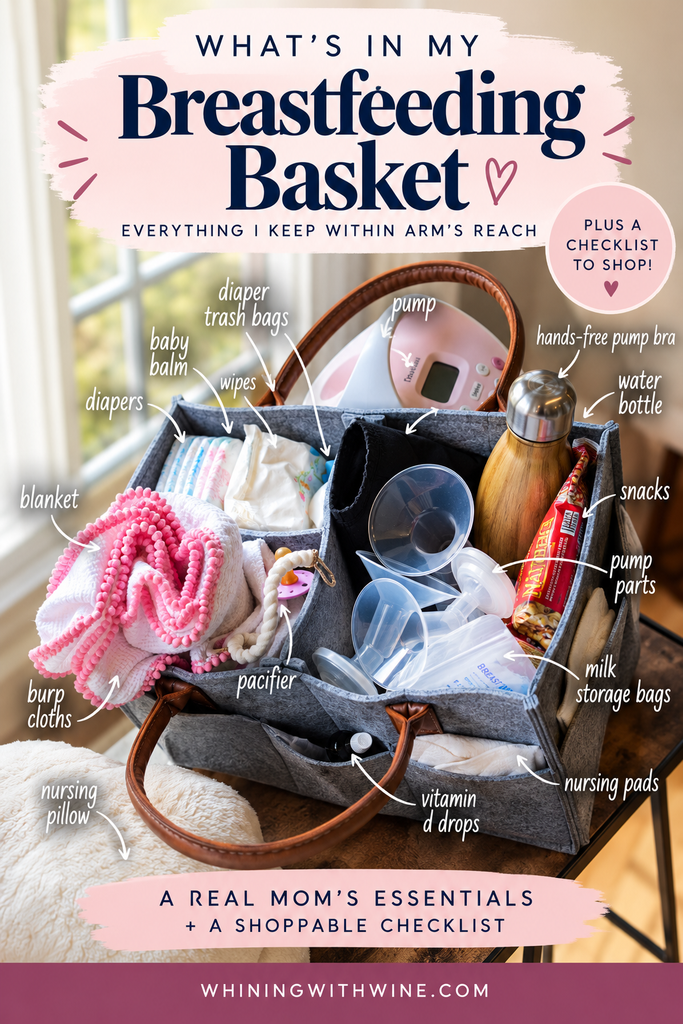
A breastfeeding basket keeps water, snacks and feeding supplies within reach when you’re settled in with your baby. After nursing three babies, these are the things I found useful. Start with the short checklist below, then add pumping supplies and extras only if you need them.
Last updated November 2026. This post contains affiliate links. As an Amazon Associate I earn from qualifying purchases, at no extra cost to you.
Breastfeeding Basket Checklist
You do not need everything on this page. Start small and add supplies as you learn what makes feeding easier.
Start here
- Water bottle and easy snacks
- Burp cloths
- Nursing pads
- A few diapers and wipes
- Vitamin D drops
If you pump
- Pump
- Pump parts
- Hands-free pumping bra
- Milk storage bags
Optional extras
- Silicone milk collector
- Nipple cream or soothers
- Baby balm
- Nail files
- Diaper disposal bags
- Nursing cover
- Wearable pump
What Is a Breastfeeding Basket?
A breastfeeding basket, nursing caddy, or nursing basket is a portable bin for supplies you want beside you while feeding. A nursing station is the whole setup: your chair, side table, basket, and pillow.
This divided basket is the basket I use. I like it because it has multiple compartments and dividers, as well as pockets on the side for easy access to smaller items. I keep it next to my primary pump and nursing pillow. The pump and pillow stay beside the basket rather than inside it.

What to Put in a Breastfeeding Basket
Breastfeeding

Water bottle: Moments after I start nursing or pumping, I immediately feel thirsty. A bottle you can open with one hand is especially convenient. This one holds more water if you prefer fewer refills. Use a bottle you already own before buying another.

Silicone milk saver: I didn’t discover this until my third baby, and now it’s a must-have. It suctions to one breast and catches the milk that leaks during letdown while baby feeds on the other side. How much it collects varies. This suction-style collector is different from a passive shell that simply catches drips. If you have other kids running around, look at one that includes the base or lid you want.
Snacks: Breastfeeding makes you so hungry! Choose easy snacks you actually enjoy; they do not need to be marketed for lactation. Lactation cookies and Figgy Pops were in my breastfeeding basket for much-needed easy snacks.
Nursing pads: Essential to prevent leaking milk from seeping through your shirt! I like having both disposable and washable. Disposable pads are convenient when you do not want extra laundry; washable pads suit repeat use if you are happy to wash them.
Nursing pillow: My Boppy is next to my basket. A feeding pillow is optional; choose based on your comfort and keep it for supervised feeding, not sleep.
Pumping
If you pump, keep clean parts and storage supplies ready to use. Choose parts that fit your particular pump; similar-looking kits are not necessarily interchangeable.

Hands-free pump bra: This is critical for not absolutely hating your time spent pumping. With free hands you can scroll through your phone, do work on your laptop, or read a book to your toddler. You could get a bra specifically for pumping, or one that doubles as a nursing bra so you can wear it all day.
Pump parts: I used the Spectra S2, so I kept my clean Spectra pump parts in the basket ready to go when I chose to pump.
Milk storage bags: You can keep your milk in the fridge in the bottles you pump into, or you can transfer the milk to storage bags. I’ve tried a few kinds and had the fewest leaks or problems with these. Tip: Lay the bag flat when freezing the milk. You can then store several bags together like bricks, and they will take up less space in your freezer.

Hands-free pump: A wearable can be convenient when you want to move around during a pumping session. It is an optional purchase, not something every nursing basket needs. Consider one after you know how often you pump and whether your existing pump meets your needs. Check fit, cleaning requirements, and insurance coverage before buying.
Baby

Vitamin D drops: The CDC summarizes the recommendation for 400 IU of vitamin D daily for breastfed and partially breastfed infants, beginning in the first few days of life. Confirm the product and dose with your pediatrician; concentrations vary.
Diapers: While you’ll likely do most diaper changes somewhere else, it’s convenient to have diapers nearby in case baby needs an easy change.

Wipes: I like these wipes because they can be used for diaper changes, but also to clean my children’s hands and faces.
Diaper trash bags: We have these wherever we may do a diaper change that is away from our diaper pail or garage trash. We also keep a lot of them in the diaper bag!
Baby balm: This is a balm I liked keeping nearby. Check the label for its intended uses and ingredients; a baby balm is not automatically suitable for nipples. If you want something you can get on Amazon Prime (as a busy new mom, Amazon Prime is LIFE!), check out this baby coconut oil. Check its directions and avoid ingredients you or your baby react to. One suitable skin-care product may be enough; you do not need both.
Baby nail files and/or clipper: A nursing baby may be still enough to allow for peaceful nail filing (I prefer filing over trimming on baby nails)!
Blanket: I keep these everywhere. You never know when you need to cover up baby, lay it down for tummy time, or use as a breastfeeding cover.
Burp cloths: If your baby spits up a lot, you can’t have too many of these!
Pacifier: Your baby may not like the pacifier or may have a strong preference for a particular nipple shape. If you use a pacifier, a clip is helpful to prevent it from falling on the ground. The AAP advises waiting until breastfeeding is going well before introducing a pacifier.
For a fuller changing setup, see my diapering essentials guide.
Other “Nice to Haves”
Nipple cream: An optional comfort item, not a fix for a painful latch. If feeding hurts or your nipples are damaged, ask a lactation professional or clinician for help.
Nursing cover: If a visitor shows up and you want to cover up when nursing, have a cover in your basket. Alternatively, you could just use the baby blanket to help give you some privacy.
Nipple soothers: Optional, and often expensive. Start with help for the cause of discomfort before buying another product.
For more help planning your feeding setup, see my breastfeeding essentials.
On a Budget? Here’s Where You Can Save
- Reuse a basket and water bottle. Dividers are convenient, but a bin or tote you own works too.
- Wait on a wearable pump and large kits. Check insurance benefits and use your existing setup before buying extras.
- Keep duplicates small. A few nighttime supplies may be enough instead of a second fully stocked basket.
Breastfeeding Gift Basket Ideas
A breastfeeding basket can make a thoughtful new-mom gift. Start with snacks, burp cloths and a water bottle, then ask about her preferences before adding personal feeding products. You could include homemade lactation cookies.
Tap any image or product name below to shop on Amazon.


A preassembled kit can be convenient as a gift. Check every included item against your needs and compare the total with buying just the supplies you want.
Breastfeeding Basket FAQ
Keep it right next to wherever you nurse most, usually the couch, a glider or your bed. Some moms keep a second, smaller basket by the bed for night feeds.
They are mostly the same idea. A nursing station usually means the whole setup (chair, pillow and side table), while a breastfeeding basket or nursing caddy is the portable bin that holds your supplies, so you can move it from room to room.
Yes—keep it simple with a basket, snacks, burp cloths and a water bottle. Ask about feeding plans and preferences before adding pumps, creams or other personal items.
What to Read Next
- Postpartum Care at Home →
Prepare for your recovery. - Breastfeeding Essentials →
Plan your feeding setup. - Sample Amazon Baby Registry →
Keep building your registry.